

Obsessive-compulsive disorder is often associated with visible behaviors like checking locks, excessive cleaning, or arranging objects so they’re “just right.” But for many people, OCD happens internally, through intrusive thoughts, rumination, and hidden mental compulsions that can be difficult to recognize.
What is Pure O OCD?
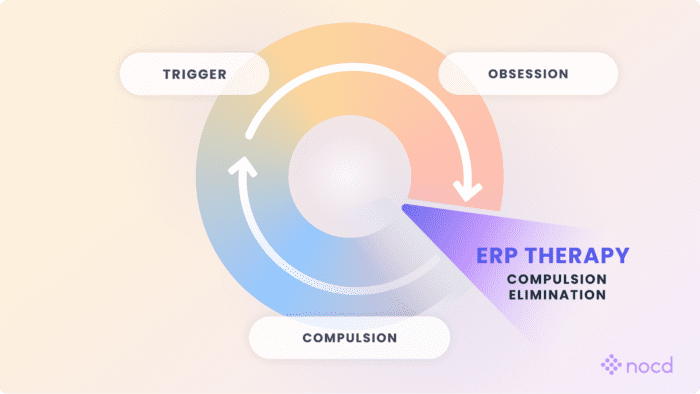
Obsessive-compulsive disorder (OCD) is a mental health condition characterized by intrusive thoughts, images, urges, feelings, or sensations (obsessions), and the compulsions performed to relieve anxiety or create certainty.
In pure obsessional (“Pure O”) OCD, those compulsions happen mentally instead of as obvious outward behaviors. People with Pure O often spend hours replaying memories, seeking reassurance, or trying to “figure out” what intrusive thoughts mean. In a study of 225 patients with OCD, 13% reported mental compulsions as their main compulsion.
Because these compulsions take place internally, Pure O can be difficult to recognize—even for the people experiencing it. Many assume they’re simply anxious or overthinking, without realizing they may be experiencing OCD.
It’s common for people with Pure O OCD to feel like they are the only ones dealing with these challenges.
Nicholas Farrell, PhD, LP, Director of Clinical Development and Programming at NOCD
Common signs of Pure O OCD include:
- Mentally reviewing thoughts, memories, or feelings for extended periods
- Seeking reassurance or certainty about fears and doubts
- Avoiding situations that trigger intrusive thoughts
- Feeling intense guilt, shame, or fear about what their thoughts might mean
- Struggling to accept uncertainty about fears and doubts
Although Pure O is a widely used term, it’s not a separate diagnosis in the Diagnostic and Statistical Manual of Mental Disorders (DSM-5-TR).
What are some examples of Pure O OCD?
Because Pure O compulsions can occur across many different OCD subtypes, the specific fears and doubts vary from person to person. Here are a few examples of how the OCD cycle can show up in daily life.
| Obsession | Compulsion |
| “What if I don’t really love my partner?” | Constantly monitoring feelings or looking for “proof” the relationship is right |
| “What if I accidentally hurt someone without realizing it?” | Mentally reviewing memories or replaying past actions |
| “What if these thoughts mean something terrible about me?” | Ruminating for hours about what the thought “really” means |
| “What if I say or do something wrong?” | Silently repeating phrases to feel certain nothing bad happened |
How is Pure O OCD treated?
Pure O OCD is highly treatable, and many people see major reductions in symptoms with appropriate treatment.
The most effective treatment for Pure O is exposure and response prevention (ERP) therapy, a specialized form of cognitive behavioral therapy (CBT) designed specifically for OCD. ERP helps people experience intrusive thoughts and uncertainty without falling into rumination, reassurance-seeking, or mental checking.
For people with Pure O, ERP may involve:
- Allowing intrusive thoughts to exist without trying to solve them
- Resisting the urge to seek reassurance or certainty
- Reducing rumination and mental checking
- Learning to tolerate uncertainty instead of fighting it
Research shows ERP is highly effective for all forms of OCD, including Pure O, with up to 80% of people showing significant improvement. Some people also benefit from medication, such as selective serotonin reuptake inhibitors (SSRIs), or acceptance and commitment therapy (ACT), which is often used alongside ERP.
Severe, treatment-resistant pure OCD may benefit from the following treatments:
- Transcranial magnetic stimulation (TMS)
- Deep brain stimulation (DBS)
- Intensive outpatient programs (IOPs)
- Partial hospital programs (PHPs)
- Residential treatment centers (RTCs)
- Gamma knife radiosurgery (GKRS)
Because mental compulsions can be subtle, it’s important to work with a therapist who specializes in OCD and ERP therapy.

Find the right OCD therapist for you
All our therapists are licensed and trained in exposure and response prevention therapy (ERP), the gold standard treatment for OCD.
Bottom line
Pure O OCD can feel isolating, especially when the compulsions happen silently and are difficult for other people to recognize. But with effective treatment, many people learn how to experience intrusive thoughts without getting pulled into cycles of rumination, fear, and mental compulsions.